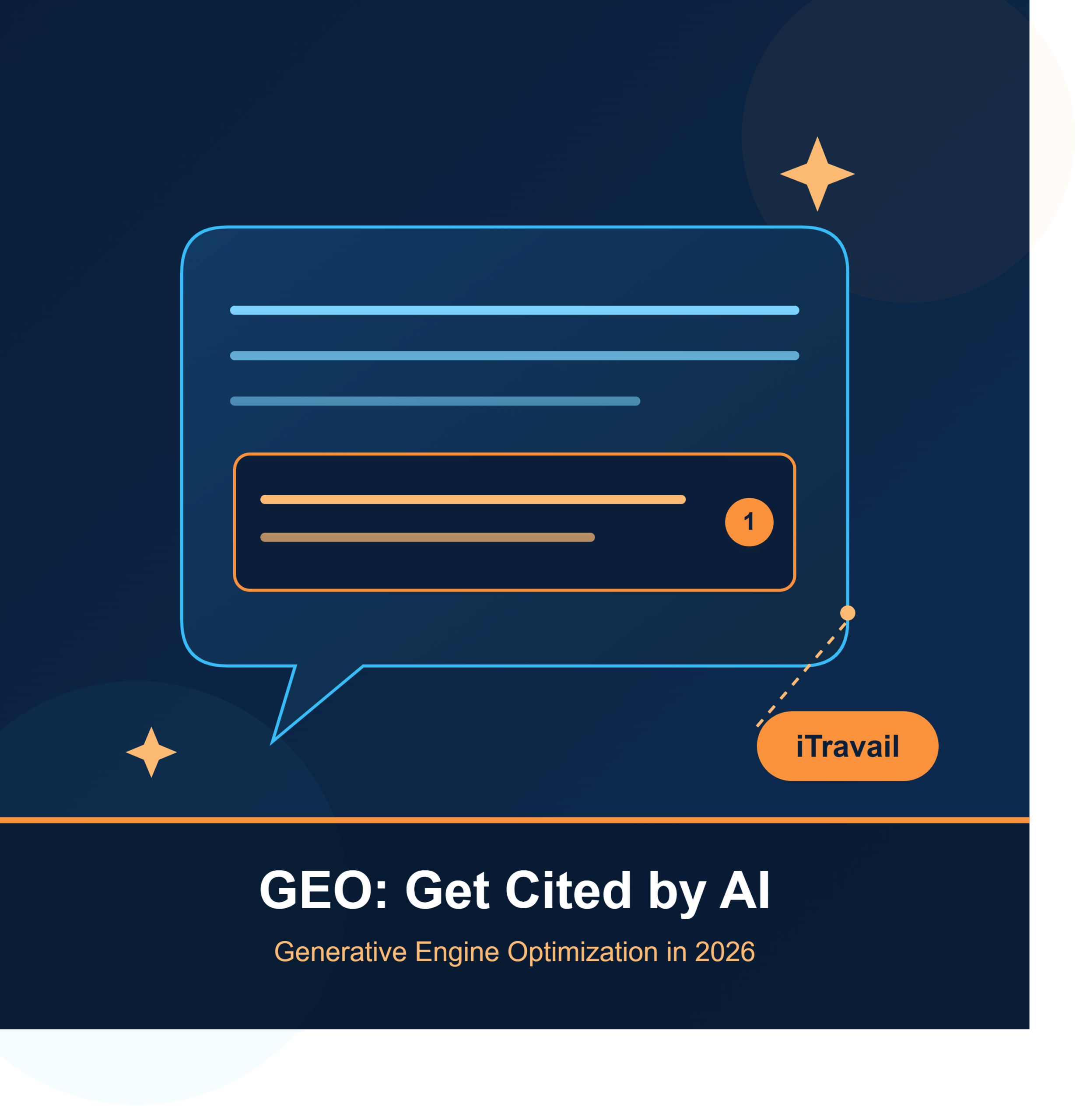
For over a decade, the goal of digital marketing was simple: rank on page one of Google. In 2026, that goal still matters — but it’s no longer the finish line. A growing share of your customers are now asking ChatGPT, Perplexity, or Google’s AI Overviews a question and getting a direct answer, with a handful of brands cited as sources. If your business isn’t one of those sources, you’re invisible at the exact moment someone is deciding who to trust.
This is the discipline now known as Generative Engine Optimization (GEO) — and if you haven’t started thinking about it yet, your competitors likely already are.
GEO is the practice of structuring, writing, and publishing content so that AI systems — ChatGPT, Perplexity, Google AI Overviews and AI Mode, Gemini, and Claude — choose to cite your business when generating an answer to a user’s question.
Where traditional SEO optimizes for a ranked position in a list of blue links, GEO optimizes for something different: being one of the sources an AI model pulls from when it writes its response. There’s no “position #1” inside ChatGPT — visibility in AI search is closer to a mention rate than a ranking. The real question isn’t “am I on page one,” it’s “how often does my brand get pulled into the answer across dozens of different ways someone might ask the question.”
The numbers make the shift hard to ignore:
That gap between intent and action is exactly where an early mover can pull ahead — cheaply, before the space gets competitive.
GEO, Generative Engine Optimization, doesn’t replace SEO — it builds on top of it. A slow, thin, low-authority website won’t get cited by an AI system no matter how well-structured a single page is. The two disciplines reinforce each other:
| SEO | GEO |
|---|---|
|
✔ Optimizes for ranked position in search results ✔ Success metric: clicks, rankings, CTR ✔ Built on backlinks, keywords, technical SEO |
✔ Optimizes for being cited as a source in an AI-generated answer ✔ Success metric: citation frequency, mention rate across prompts ✔ Built on fact density, structured data, clear, direct answers |
You don’t need to panic or throw out your existing content strategy. Here’s a practical action plan:
Fast pages, clean site structure, and schema markup are still the foundation everything else is built on.
AI systems favor content with clear, extractable answers — think concise definitions, numbered steps, and comparison tables, rather than long, meandering paragraphs.
Including specific data points, statistics, and concrete details (rather than vague marketing language) has been shown to meaningfully improve how often lower-ranked pages get pulled into AI answers.
When someone asks an AI a long question, the model often breaks it into smaller sub-queries behind the scenes. Structure your content (with clear subheadings) to answer each of those pieces directly.
Original research, case studies, and third-party coverage all raise the odds of being treated as a trustworthy source.
Periodically run your target questions through ChatGPT, Perplexity, and Google AI Mode yourself and note which brands get cited — including whether it's you.

GEO, Generative Engine Optimization, isn’t a replacement for SEO (Search Engine Optimization), and it isn’t a passing trend — it’s the next layer of visibility your business needs, sitting directly on top of the SEO work you’re likely already doing (or should be). The businesses that start structuring their content to be genuinely citable now will be the ones AI systems recommend by default over the next few years. The ones that wait will be playing catch-up against competitors who already own the answer.
Get a free digital marketing audit. We’ll check both your traditional SEO health and your visibility in AI-generated answers, and show you exactly where the gaps are.
We help businesses grow online with result-driven digital marketing strategies. From SEO and social media to Google Ads, Meta Ads, and lead generation, we create tailored solutions that build visibility, attract the right audience, and drive sustainable growth.
© 2025 Created with iTravail Solutions
iTravail Solutions
Typically replies within minutes
Any questions related to Digital Marketing?
WhatsApp Us
Online | Privacy policy
Chat With Us