If you’ve noticed your website getting more impressions but fewer clicks in Google Search Console lately, you’re not imagining it. Search itself has changed. Google AI Mode — the AI-powered search experience Google expanded aggressively through 2026 — is fundamentally rewriting how people find businesses online, and most business owners haven’t caught up yet.
Here’s what’s actually happening, and what you can do about it.
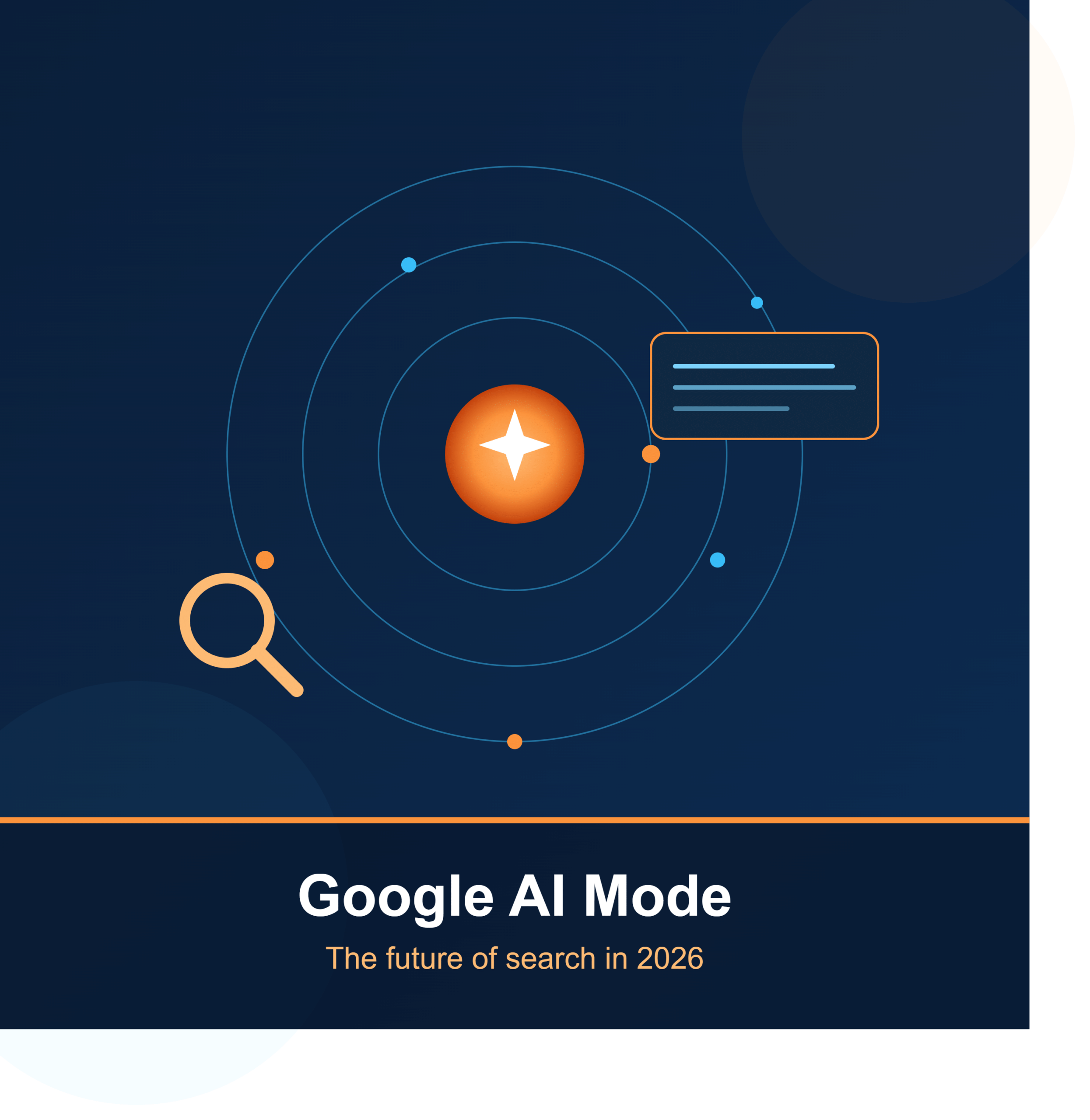
Google AI Mode is an AI-driven search experience built for longer, more exploratory questions rather than simple keyword searches. Instead of typing a query and scrolling through ten blue links, users can ask a complex question, get a synthesized answer pulled from multiple sources, and continue the conversation with follow-up questions — all without leaving the search results page.
Google announced at its 2026 developer conference that AI Mode had crossed **one billion monthly users**, with usage more than doubling every quarter since launch. It’s no longer an experiment — it’s becoming the default way people search.
The old rules of SEO were simple: rank on page one, get the click, convert the visitor. That model is breaking down.
✔ AI Overviews now appear on a large and growing share of search queries – and for certain categories like health, finance, and technology, that share climbs even higher.
✔ Search Console data across many sites shows the same pattern: impressions are rising while clicks and click-through rates are falling. Google’s AI is increasingly answering the question directly, which means fewer users ever reach your website.
✔ At the same time, brands that do get cited inside AI-generated answers are seeing a meaningful lift in paid ad performance — organic visibility and paid visibility are now connected in a way they weren’t before.
In short: showing up in the answer matters more than ever, even as fewer people click through afterward.
You’ll start hearing the term GEO — Generative Engine Optimization — alongside traditional SEO. GEO is the practice of optimizing your content so AI systems (Google AI Mode, AI Overviews, ChatGPT, and others) are more likely to cite your business as a source when generating an answer.
Importantly, GEO isn’t a replacement for SEO — it’s built on top of it. The businesses winning visibility in AI-driven search are the ones combining:
You don’t need to panic or throw out your existing content strategy. Here’s a practical action plan:
If you're not using schema markup for your services, FAQs, and local business info, that's step one.
Google's own guidance is clear: quality and originality beat volume. One well-researched, genuinely useful article outperforms ten generic ones.
Cover a subject from multiple angles over time — beginner guides, case studies, FAQs, comparisons — so both users and AI systems see you as a trusted source on that topic.
Don't just watch rankings and clicks — start monitoring whether your brand is being cited inside AI Overviews and AI Mode answers for relevant queries.
For local businesses especially, consistent NAP (name, address, phone) data, Google Business Profile activity, and location-specific content still heavily influence how AI surfaces local results.

Google AI Mode isn’t a passing trend — it’s the direction search is permanently heading. The businesses that adapt now, by combining solid SEO fundamentals with genuinely original, well-structured content, will be the ones AI systems trust enough to recommend. The businesses that keep publishing thin, generic content built purely for keyword rankings will find themselves increasingly invisible — even if their old rankings look fine on paper.
Get a free digital marketing audit and see exactly how visible your business is—both in traditional search and in the AI answers your customers see today.
We help businesses grow online with result-driven digital marketing strategies. From SEO and social media to Google Ads, Meta Ads, and lead generation, we create tailored solutions that build visibility, attract the right audience, and drive sustainable growth.
© 2025 Created with iTravail Solutions
iTravail Solutions
Typically replies within minutes
Any questions related to Digital Marketing?
WhatsApp Us
Online | Privacy policy
Chat With Us